Quick Answer: White label clothing is a ready-made product that a manufacturer sells to lots of brands. You add your logo or label, but the garment itself is the same one other brands sell. Private label clothing is made for your brand only, to your own specs, with your choice of fabric, fit, colors and branding. White label is cheaper and faster to start. Private label costs more but gives you a product nobody else has. Most new brands start with white label to test the market and move to private label once they know what sells.
These two terms get mixed up a lot. We’ve had people message us asking for “white label” when they really want their own fit and fabric, and people asking for “private label” when they just want their logo on a blank tee. Neither is wrong to ask for. But it helps to know the difference before you start getting quotes, because the price, the timeline and what you end up with are very different.
In this guide we’ll explain both in plain terms, compare the costs, go through the good and bad sides of each, and help you work out which one makes more sense for where your brand is right now.
What Is White Label Clothing?
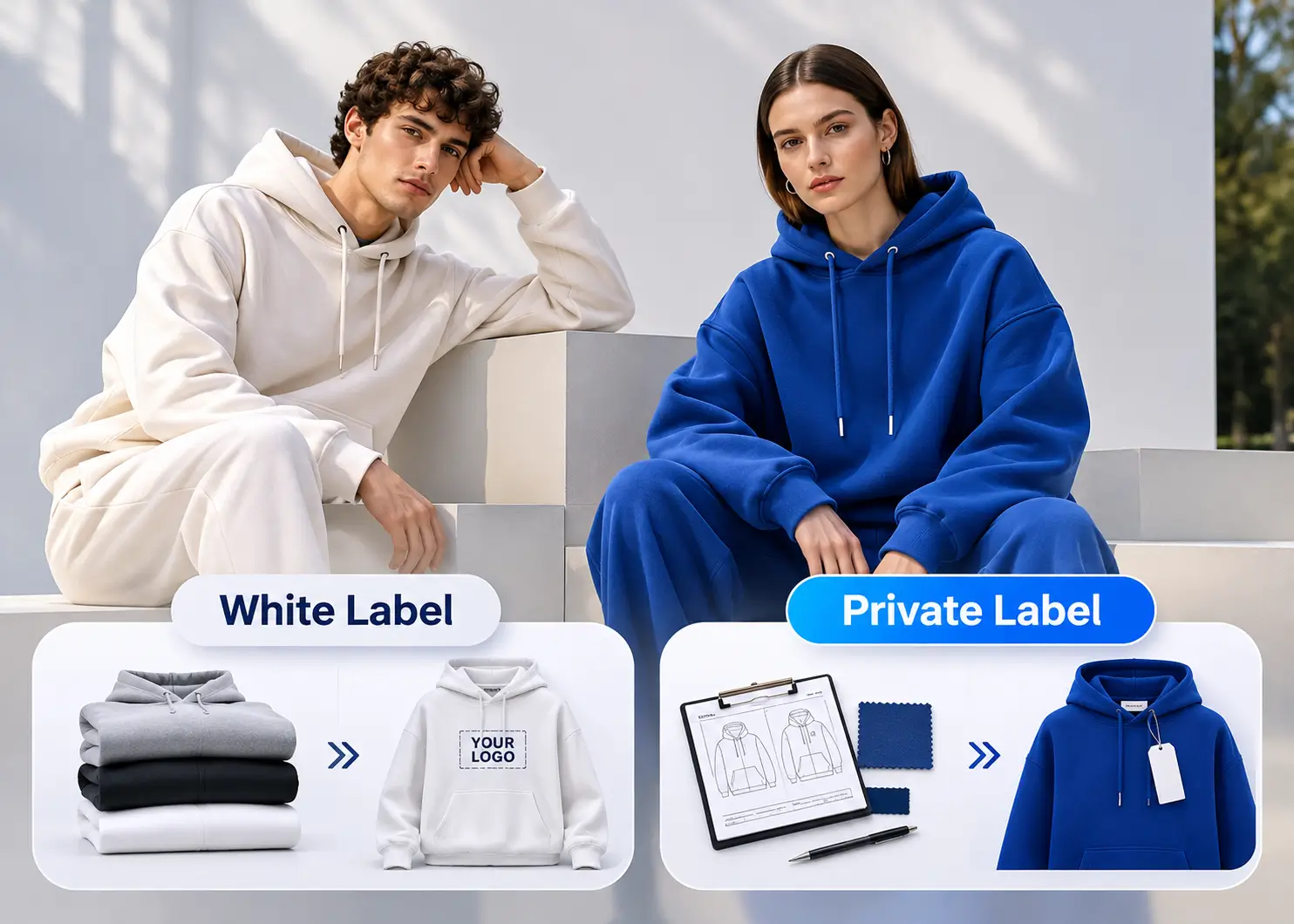
White label clothing is a product that’s already been designed and made by a manufacturer. They sell the same item to lots of different brands. Each brand puts its own label or logo on it and sells it as their own.
How It Works
You pick from a catalog of ready-made pieces, like a basic hoodie in a set list of colors. You choose your sizes and quantities. Then the manufacturer adds your branding, usually a printed logo, an embroidered logo or a neck label. You don’t get any say in the pattern, the fabric or the fit. Those are already set.
A Simple Example
Say you run a gym and want to sell branded tees to your members. You pick a black tee from a supplier’s catalog, send them your logo, and they print it on the chest. Another gym across town could be selling the exact same tee with a different logo. That’s white label.
What Is Private Label Clothing?
Private label clothing is made just for your brand. The manufacturer produces it to your specs, and they don’t sell that exact product to anyone else.
How It Works
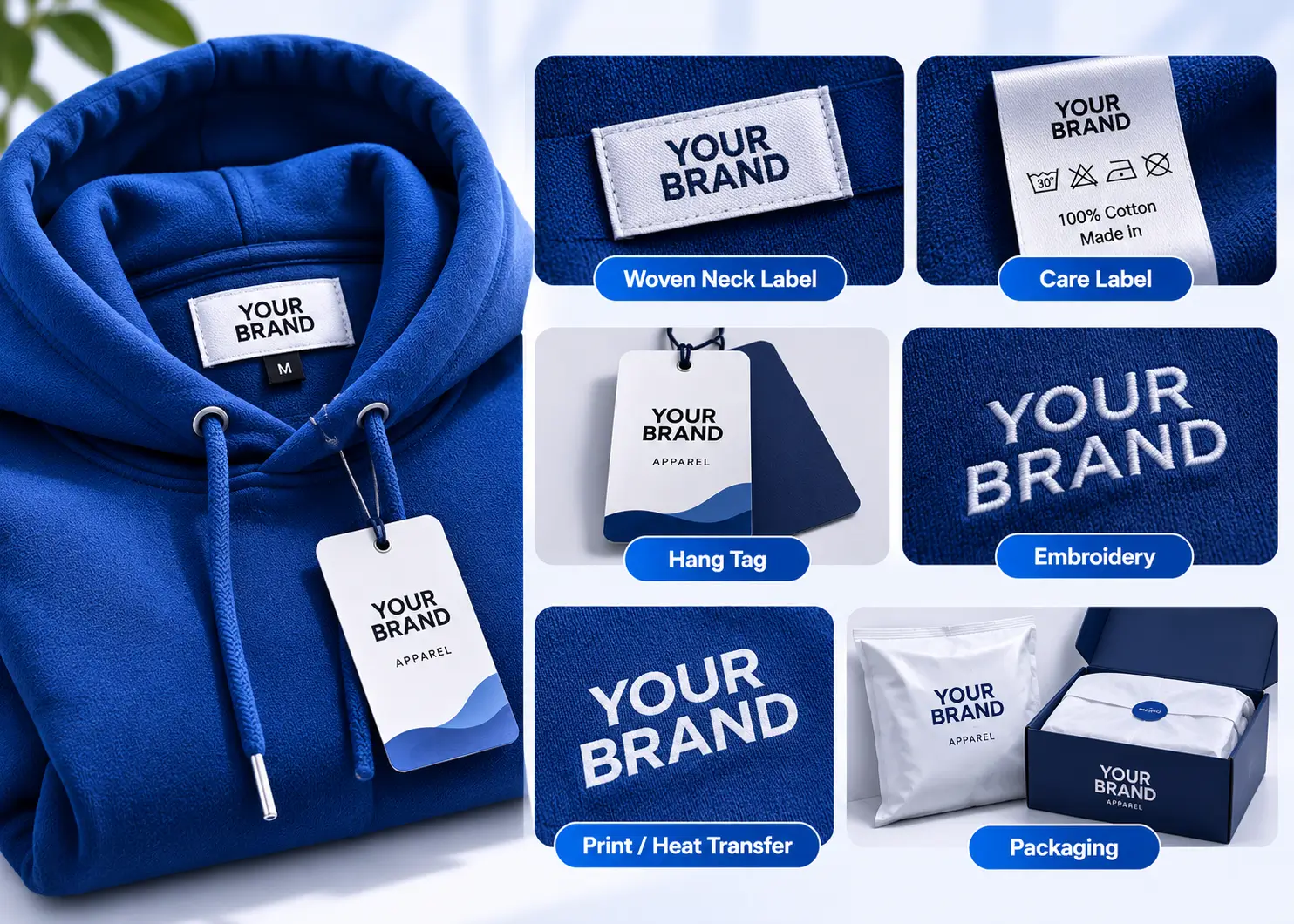
You tell the manufacturer what you want. That might be a specific fabric weight, a boxier fit, a certain shade of green, a drop shoulder or a longer hem. You usually send a tech pack, or work with the factory to make one. They make a sample, you check it, and once you approve it, they produce your order with your own labels, tags and packaging.
Private label can mean different amounts of customization. Some brands start with a factory’s base pattern and change the fabric, color and fit a bit. Others go all the way and design every detail from scratch. Either way, the product is yours.
A Simple Example
Say you’re launching a streetwear brand. You want a heavyweight hoodie in 400gsm fleece, cut oversized with dropped shoulders, in a washed charcoal color, with your woven label on the neck and a custom hang tag. A private label manufacturer makes it to those specs. Nobody else is selling that hoodie. That’s private label.
The Main Differences
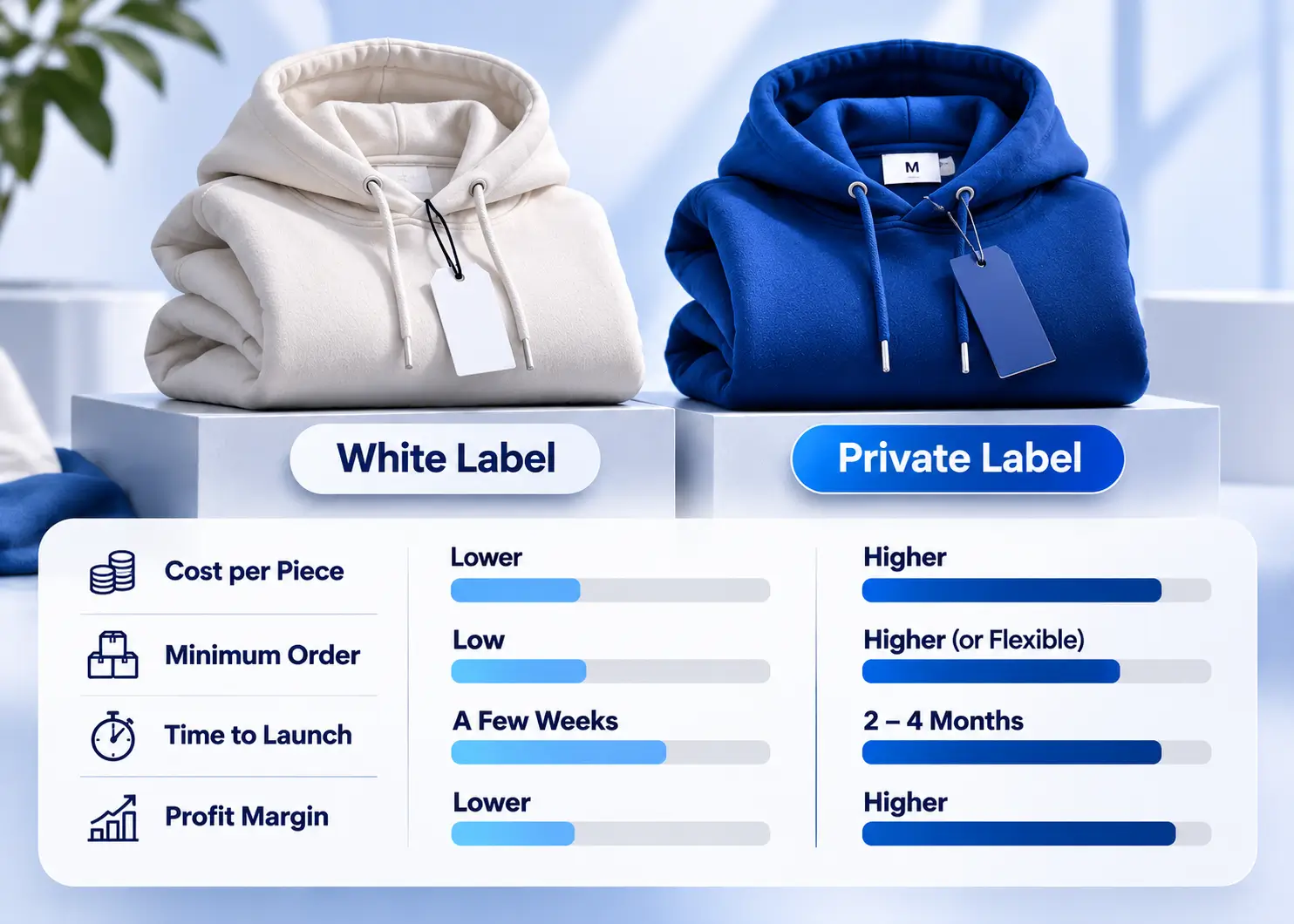
Here’s a side-by-side look at how they compare.
White Label | Private Label | |
|---|---|---|
Who designs it | The manufacturer | You, or you and the manufacturer |
Who else sells it | Many other brands | Only you |
Fabric & fit | Already set | Your choice |
Branding | Logo print or basic label | Custom labels, tags, packaging |
Minimum order | Usually low | Usually higher, but some factories offer low MOQs |
Cost per piece | Lower | Higher |
Time to launch | A few weeks | Usually two to four months |
Profit margin | Lower | Higher |
Brand value | Harder to stand out | Easier to build a unique brand |
Pros and Cons of White Label Clothing
The Good Side
It’s quick. You can have branded stock in a few weeks because the garment already exists. There’s no pattern to develop and usually no long sampling stage.
It’s cheaper to start. Minimum orders tend to be low, and you’re not paying for pattern making or multiple sample rounds. If you only have a small budget, this lets you get something out there.
There’s less risk. If a design doesn’t sell, you haven’t spent a lot developing it. That makes white label good for testing ideas, merch for events, or uniforms for staff.
The Downside
Your product isn’t unique. Other brands can sell the exact same garment. If a customer sees the same hoodie on another site for less, it’s hard to explain why yours costs more.
You have no control over quality. If the supplier changes the fabric or the fit between batches, there’s not much you can do about it.
Your margins are thinner. You’re competing with everyone else using the same blank, so it’s hard to charge a premium price.
Pros and Cons of Private Label Clothing
The Good Side
The product is yours. The fit, the fabric and the details are all your choice, and nobody else can sell the same thing. That’s what makes people remember a brand.
You control the quality. You approve the sample, and the factory has to match it on every order. If you want a heavier fabric or a better stitch, you can have it.
You can charge more. When your product is different and better made, people are willing to pay more for it. That means better margins, and more room to spend on marketing.
It’s easier to grow. Once you’ve got a pattern and fabric that work, you can reorder the same thing again and again, or build new styles from it.
The Downside
It costs more upfront. You’ll pay for tech packs, samples and usually a bigger first order. Our guide on the cost to start a clothing line goes through these numbers in more detail.
It takes longer. Between sampling and production, you’re usually looking at two to four months before your stock arrives.
You need to get more right. Fit, sizing, fabric and color are now your decisions. A good manufacturer will help you with this, but you’ll need to be more involved.
How the Costs Compare
Prices depend on the product, fabric and how much branding you add. But here’s a rough idea of what a small first order might look like for a hoodie.
White Label Hoodie | Private Label Hoodie | |
|---|---|---|
Design & tech pack | Not needed | $100–$500 |
Samples | $0–$50 | $100–$400 (2 rounds) |
Cost per piece | $10–$20 | $14–$30 |
Branding per piece | $1–$4 (print or embroidery) | $1–$5 (labels, tags, print, embroidery) |
Typical first order | 25–100 pieces | 50–300 pieces |
Time to receive stock | 1–4 weeks | 2–4 months |
White label wins on upfront cost and speed. Private label usually wins over time, because you can sell each piece for more and build a brand people come back to.
Which One Should You Pick?
It depends on what you’re trying to do and how much you have to spend. Here’s how we’d think about it.
White Label Makes Sense If
You’re testing an idea and don’t want to spend much yet. You need merch for an event, a band, a gym or a YouTube channel, where the logo matters more than the garment. You need staff uniforms quickly. Or you’re working with a very small budget, say under $2,000.
Private Label Makes Sense If
You want to build a real fashion brand that people buy because of the product, not just the logo. You care about fit and fabric. You want to charge more than the cheap version on Amazon. Or you’ve already tested your idea and know people want it.
You Can Also Do Both
A lot of brands start with white label to see what people like, then switch their best sellers to private label once they know they’ll sell. Some keep white label for basics and accessories like socks or caps, and use private label for their main pieces like hoodies and leggings.
What About Custom Cut-and-Sew?
You’ll also see “cut-and-sew” mentioned a lot. That’s when the garment is made completely from scratch, from your own pattern, with fabric cut and sewn just for you. It’s the most custom form of private label.
So you can think of it as three levels. White label is a ready-made product with your logo. Private label is a product made for you, often starting from a base pattern. Full cut-and-sew is everything designed by you from zero. The more custom you go, the more it costs and the longer it takes, but the more the product belongs to you.
Mistakes We See Brands Make
One is calling it a “premium brand” but using white label blanks that anyone can buy. Customers often notice, especially when they find the same tag on a cheaper site.
Another is going straight to full custom with ten styles and no testing. That’s a lot of money tied up before you know what people want.
Some brands skip the sample stage on private label to save time. Then the bulk order comes in with the wrong fit, and it costs far more to fix than a second sample would have.
And a lot of people pick a manufacturer just on price. If you’re not sure how to choose one, our guide on how to find a reliable clothing manufacturer goes through what to ask and what to watch out for.
Moving From White Label to Private Label
If you’re already selling white label and want to switch, you don’t have to do it all at once. Start with your best-selling piece. Look at what customers say about it. Maybe they want it longer, heavier or in a different color. Those notes become your tech pack.
Then get a sample made with those changes, test it, and order a small run. Once that sells, move the next piece over. Doing it this way keeps your cash flow steady and your customers usually notice the step up in quality.
How Private Label Works at Swift Apparel
We’re a private label clothing manufacturer, so this is most of what we do. When you work with us, we can help with:
- Fabric sourcing and custom color matching
- Pattern changes, fit adjustments and extended or specialty sizing
- Samples so you can check everything before bulk
- Woven labels, hang tags, heat transfers and custom packaging
- Printing and embroidery
- Quality checks during sampling, production and packing
We make t-shirts, hoodies, activewear, polos, kids clothing and a lot more. For larger orders, we also offer bulk manufacturing. Bulk production usually takes 4 to 8 weeks after you approve the sample. You can see our past work in our portfolio, read what clients say in our testimonials, or check our FAQs for more on MOQs and timelines.
FAQs
What is the difference between private label and white label clothing?
Is private label better than white label?
Is white label clothing cheaper?
Yes, it’s usually cheaper to start with because there’s no design or sampling cost, and minimum orders are low. Private label costs more upfront but usually earns more per piece.
Can I put my own label on white label clothing?
How long does private label clothing take?
Can I start private label with a small order?
Final Thoughts
There’s no single right answer to private label vs white label clothing. White label is the faster and cheaper way to get started. Private label takes more time and money, but it gives you a product that’s actually yours, and that’s usually what turns a logo into a brand.
If you’re not sure which one fits your plans, send us your idea and we’ll talk you through the options. New clients get 10% off their first custom production run. Get a free quote here, or find out more about us and what we do.